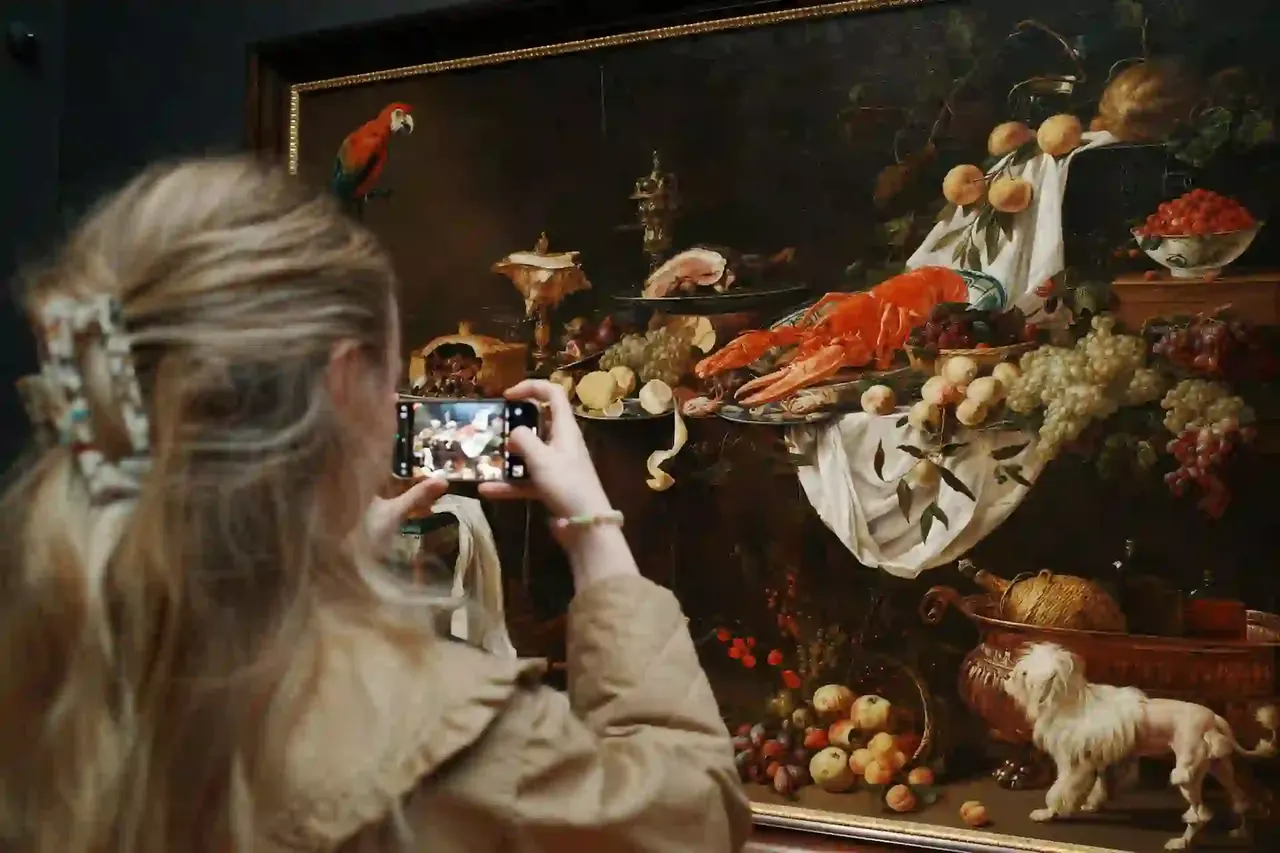
Many museums rely on their own hardware for their tours, such as the Orpheo Hybe or the Orpheo Touch. A museum app as an audio guide alongside that hardware brings a great deal: better service for visitors and a more accessible experience. You can also turn it around: app first, with hardware as a back-up for those without a suitable smartphone. In this article you can read why that combination works so well.
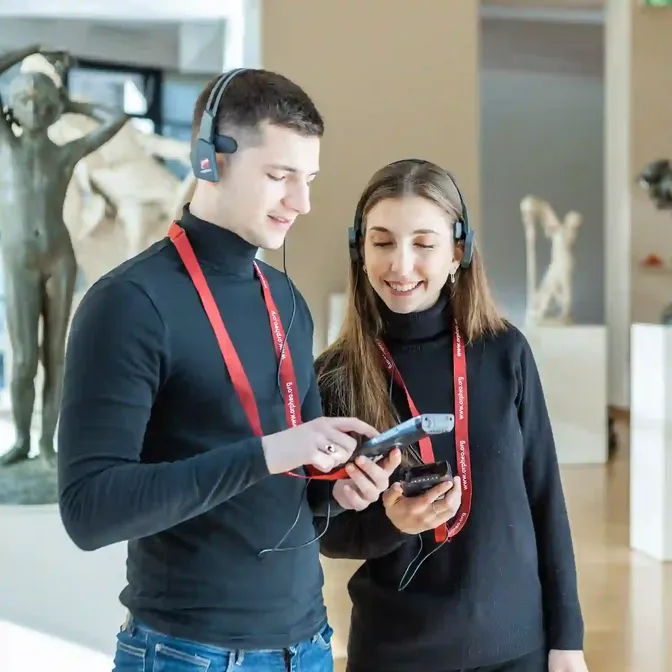
From hardware to apps: the evolution of the audio guide
Traditional hardware audio guides have more than proven their worth in museums. They are reliable and always available. At the same time, technology is developing rapidly. A museum app on the visitor's smartphone enables a personal experience without the museum having to have a device ready for every visitor. Visitors listen at their own pace, with extras such as augmented reality.
That is why more and more museums are opting for a hybrid model. It reduces maintenance, simplifies updates and enables immersive experiences. The hardware remains available as a back-up, while the app provides flexibility.
Better service for visitors
Visitors use their own device: familiar and hygienic. Changes to an exhibition appear in the app straight away, without devices having to be reloaded. Apps can also tailor the content to interests or location. That leads to higher satisfaction and a longer visit.
An app also gives insight into what visitors listen to. With that data, you can improve future exhibitions in a targeted way.
More inclusive thanks to apps
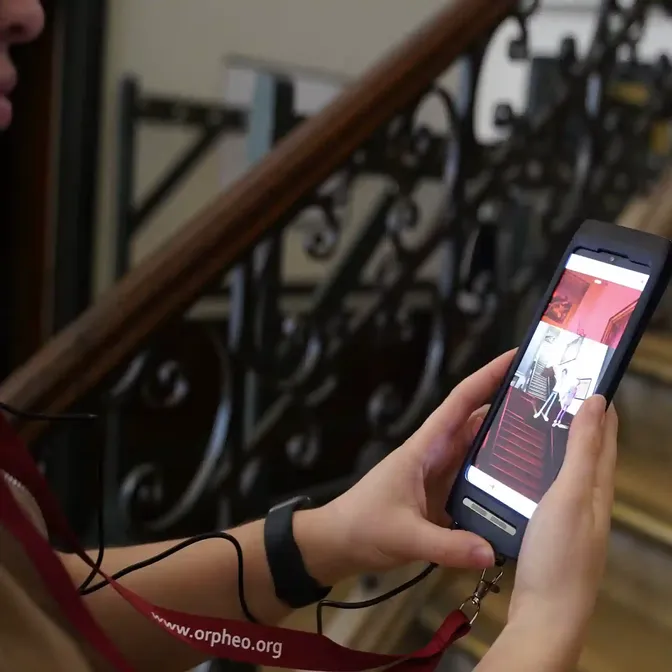
Inclusivity is one of the biggest advantages of a museum app. Whereas hardware is often limited to audio, an app supports several forms: text-to-speech for visitors with a visual impairment, subtitles or sign language for deaf and hard-of-hearing visitors. Visitors can easily choose their own language, and a calm, customisable interface is possible for neurodivergent visitors.
Not everyone has a smartphone, though, or wants to use one. That is why hardware remains essential as a back-up: that way, you exclude nobody.
The other way round: app first with hardware as a back-up
With an app-first strategy, the museum app takes centre stage and hardware is the alternative. That is cost-effective, because you need fewer devices. It is also more sustainable: fewer devices means less electronic waste.
Promote the app with QR codes at the entrance, for example. Visitors without a suitable phone are given a device. That increases the use of the app and keeps the tour accessible to everyone.
Practical tips for the roll-out
- Research your target group: which visitors do you have, and what do they need in order to take part?
- Choose one platform for app and hardware: Orpheo supplies native apps and hardware that play the same content, so you only have to create everything once.
- Test for accessibility: check the app with screen readers and in all the languages you offer.
Conclusion: a hybrid future
A museum app alongside hardware improves service, makes your tour more inclusive and gives you flexibility. Whether you choose hardware first or app first: with both options side by side, you can serve every single visitor.
Sources
Updated on
Stay up to date
Every now and then, the news from GuideXpresse in a single email: museum guides, tour guide systems, software, service and voice-overs. Short and no more often than needed.


 References